
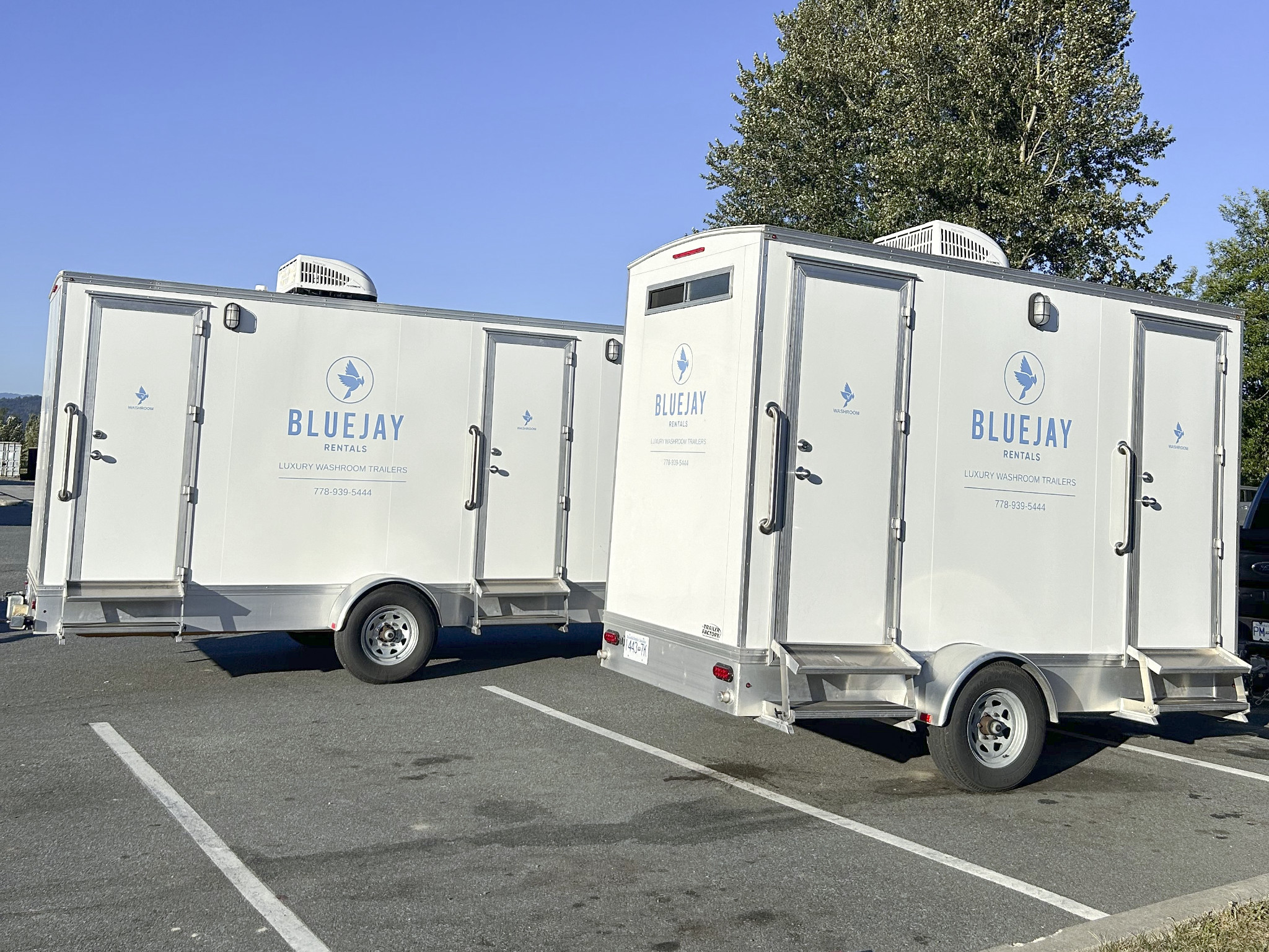
Film and TV crews do not stop for the rain, and from November through the end of winter we see productions shooting long days at basecamps in parking lots, parks and residential streets all around Metro Vancouver. Call times start in the dark, wrap often comes after dark again, and in between cast, crew and background performers are working in cold, wet conditions for twelve hours or more. On those days, rain and early darkness make basecamp washrooms a daily logistics issue rather than an afterthought. Crews need clean facilities close to set, with safe entry and enough capacity for busy call times and meal breaks, and production teams need a rental that keeps running without someone from the locations department chasing it. The work has been building, too: the B.C. government raised its production services tax credit for international projects from 28% to 36% for productions starting principal photography on or after January 1, 2025, to attract more film and TV production to the province. For winter shoots, our heated, self-contained washroom trailers give location and production managers private rooms, running water, lighting and onboard tanks that work even where a site has no hookups.1
Sizing and Placing Trailers at Basecamp
Choose trailer capacity around the number of people using the facilities, the length of the shoot and the peak breaks in the schedule. Our double trailer measures 17 feet long by 8 feet wide and has two private rooms, each with a toilet, urinal and sink, and we recommend it for one day events of up to 100 people. For a larger cast and crew, or for heavy use during meal breaks, we can match a triple or quad trailer to the expected traffic. Include background performers and extras in your headcount, since a big crowd scene can double the number of people at basecamp for a day, and tell us how many days the unit will stay on site. Placement matters just as much as size. Trailers should sit on level, firm ground with clear delivery access and a short, practical route from basecamp and set, leaving room for crew movement and production operations. Check the ground after rain and choose a spot where water is unlikely to pool around the entrance, keep the unit away from the production’s generators to limit noise near the washrooms, and keep a direct path open for pump out access. If the trailer will sit on a residential street, in a park or in a parking lot, confirm the placement with the property or site contact before delivery. Our post on site requirements and placement covers the space a trailer needs in more detail.

Winter Comfort, Remote Locations and Servicing
Heat, interior lighting, running water and handwashing sinks make a trailer far more usable through Vancouver’s cold, dark winter days. Our trailers include heaters and air conditioning, lights and running water, so crews have a climate controlled, well lit place to use the facilities and wash their hands, which is a real difference from a row of plastic units at the edge of a wet lot. Plan the entrance as carefully as the interior. Ask about stable, non slip steps, keep the approach clear of standing water, mud and gear, and position the door where crew members can reach it safely in low light without crossing busy vehicle routes or cable runs. Many winter locations also have no water or power nearby, from a forest road to a closed park or an empty lot. Our trailers carry onboard fresh water and sealed waste tanks, and a generator powers the lights, pumps and climate control, so they can operate where water and electrical connections are unavailable. We explain how that works in our post on washroom trailers at locations without power or water. Share the location conditions with us before delivery, including the planned placement and access route, so we can confirm the generator arrangements and leave enough space for delivery and service vehicles to reach the trailer.
Servicing is the part that most often catches a production off guard on a multi day shoot. The pump out schedule depends on crew size, daily use, shoot length and the trailer’s tank capacity, and multi day use can require extra pump outs, even for a double trailer that comfortably handles a one day event of up to 100 people. Share the expected headcount and schedule with us when arranging the rental so servicing can be planned around production activity rather than in the middle of a take, keep service access clear, and agree on pump out timing before the tanks approach capacity. Schedules change constantly in this industry, with added days, moved locations and bigger crowd scenes, so if the number of users or days on site changes, let us know and we will update the plan. Basecamps that move from one location to the next during a shoot can also be planned in advance, so the trailers are waiting when the trucks arrive rather than following an hour behind.
A warm, clean washroom will never make the call sheet, but every crew member notices when it is missing on a cold, wet day. Whether you are planning a one day commercial shoot or a series that will be on location through the winter, our team can help you size, place and service the right trailers for your basecamp. Learn more about our movie and film set washroom trailer rentals and get in touch with your dates, headcount and locations.
Reference