
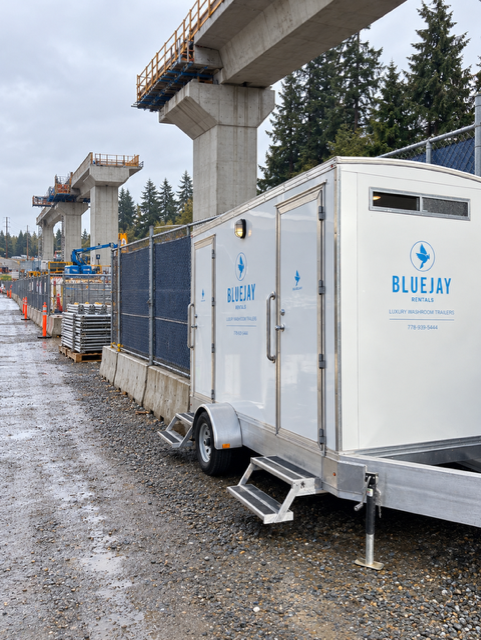
Winter is the toughest season for construction site washrooms in BC, and the sites that handle it best are the ones that plan for it before the first cold snap. From November to March, heavy rain turns access routes to mud, daylight runs out before the shift does, frost shows up on early mornings, and crews spend more of their breaks indoors to warm up. Every one of those changes puts extra pressure on the washrooms. Across the construction sites we supply in Metro Vancouver, we see the same pattern every year: a setup that worked perfectly in August can become a daily headache by December if nobody adjusted it for the weather. For construction site washrooms in winter, we recommend heated units with flushing toilets and handwashing sinks, placed on firm ground, lit for dark mornings and serviced on a schedule that matches the real crew size. Our single washroom units and double and triple washroom trailers all include private rooms, flushing toilets, sinks, heating and air conditioning and LED lighting, and we service them with our own pump out truck. This guide covers everything a contractor or site manager needs to keep site washrooms clean, warm, compliant and working right through a BC winter.
In this guide:
- Why winter is harder on site washrooms
- Why heated units matter in a cold snap
- Where to place washrooms on a muddy site
- Winter pump outs, cleaning and restocking
- The BC washroom rules in brief
- Planning a long term winter rental
- Frequently asked questions
Why Winter Is Harder on Site Washrooms
Winter makes site washrooms harder to manage because cold, wet access and shorter daylight affect both crew comfort and the logistics of keeping units serviced. Rain turns the busiest walking routes into mud, and frost creates slippery patches around entrances, steps and walkways on cold mornings. Wet boots carry water and grit inside, so floors get dirty faster and routine cleaning matters more than it does in summer. Cold mornings also make an unheated washroom genuinely unpleasant, and when crews take their breaks indoors to warm up, washroom use tends to bunch up into the same few windows of the day. Short daylight adds another layer, since workers arrive and leave in the dark for much of the season, and a poorly lit route makes it hard to see slick ground, steps and obstacles. Winter weather also affects the service truck. A pump out truck needs a firm, practical approach and enough room to reach the service point, and an access route that was fine in dry weather can turn soft and unusable after a week of rain. Planning for all of this at the start of the season is far easier than fixing it in the middle of a storm.
Why Heated Units Matter in a Cold Snap
Heated washroom units give crews a warm place to use the facilities, and they help protect plumbing when temperatures drop during a cold snap. On a frosty morning, the difference between a heated trailer and a plastic porta potty is obvious to every worker on site, and comfortable facilities are one of the simplest ways to show a crew they are valued. Heat also helps keep water lines and fixtures away from freezing conditions, which matters for units with flushing toilets and running water at the sink. Every one of our washroom units includes heating, along with flushing toilets, sinks and LED lighting. For a winter rental, confirm with your provider how the unit’s heat and water systems are meant to run, and follow their instructions for power and cold weather use. Keep the unit connected and powered as specified, and ask how service calls are handled if weather disrupts the normal schedule. Even a well heated unit needs the entrance and steps checked for ice as part of the site’s daily winter routine, because the walk to the door is often where the real risk is.
Where to Place Washrooms on a Muddy Site
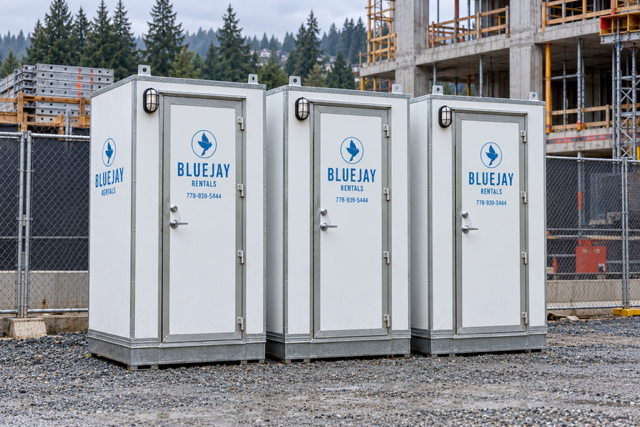
Place washrooms on level, firm ground with a stable approach for workers and clear access for the service truck. A gravel pad gives the unit a firmer base, and a plywood or gravel walkway turns a muddy route into something crews can use safely in work boots. Choose a spot that stays reachable as the site changes over the winter, keeping the service approach clear of stored materials, parked equipment and temporary fencing. Confirm the truck can reach the unit without crossing soft or unstable ground, and if site access is restricted, coordinate the service route with the site manager before delivery. The walking route should connect to a busy work area while avoiding unnecessary exposure to vehicle and equipment traffic. Add lighting along the route and at the entrance for dark mornings and evenings, since the unit’s LED interior lighting does not help anyone find their way across a dark site. Check the walking surface after every heavy rain and repair soft or uneven sections before they become a hazard.
Here is a quick winter placement checklist we share with site managers:
- Firm base: level ground, a gravel pad or a stable platform under the unit
- Safe walkway: gravel or plywood path from the work area to the door
- Lighting: the route and entrance lit for dark mornings and evenings
- Truck access: a clear, firm approach for the pump out truck in all weather
- Away from traffic: walking route separated from equipment and deliveries
- Room to move: a plan for relocating the unit as construction phases change
Winter Pump Outs, Cleaning and Restocking
Pump outs, cleaning and restocking should be scheduled around the real crew size, how heavily the unit is used, its tank capacity and how reliable site access is in wet weather. A schedule that worked during a small early phase may need adjusting as the workforce grows, and winter often brings changes that are easy to miss. More workers increase demand for pump outs and supplies, while crews sheltering indoors during breaks can concentrate use into short, busy windows. Agree on a service frequency with your rental provider at the start, then review it whenever headcount or usage changes. Keep a site contact available to report a full tank, a supply shortage or an access problem, and make sure that contact knows how to reach the provider quickly. Regular cleaning manages the mud and wet boot residue that builds up inside winter units, so decide who handles daily site checks and how service needs are reported. Holidays deserve special attention, because a scheduled visit that lands on a statutory holiday or during a site shutdown can leave a unit full when crews return. Our post on how often a construction site washroom trailer actually needs servicing goes deeper into building a schedule that fits your job.
The BC Washroom Rules in Brief
Since October 1, 2024, BC construction sites with 25 or more workers must provide flush toilets connected to a sewer or holding tank, along with handwashing, privacy, ventilation and regular cleaning, unless providing flush toilets is not practicable. The province announced the change as a health and safety issue for construction workers, and also as a way to help the industry attract and keep workers, as described in the Province of BC’s announcement. The threshold applies when 25 or more workers will be on site at any point in the project, so plan for your busiest phase rather than today’s headcount. If an employer decides flush toilets are not practicable, they must be able to justify that decision with a rationale and evidence. For rental planning, confirm the toilet connection and waste holding arrangement with your provider, check that each unit offers privacy, handwashing and ventilation, and establish how cleaning and records will be handled. Our units provide private rooms, flushing toilets and sinks, and our service covers waste removal and upkeep. For a full walkthrough of the rules, see our post on why WorkSafeBC now requires flush toilets on BC construction sites.
Planning a Long Term Winter Rental
Plan a long term winter rental by matching unit capacity to your expected workforce and confirming delivery, service access and rental length before site conditions get worse. Single washroom units suit smaller crews and tight sites, while double and triple trailers give larger crews more rooms and shorter waits at busy times. Share your project schedule and expected workforce changes with the rental provider, and confirm where the unit will sit, how the service truck will reach it and what base and walkway preparation is needed. Because our own pump out truck services our rentals across Metro Vancouver, access planning is part of how we coordinate every winter site. Build planned holiday closures and weather sensitive work periods into the service plan, name a contact for schedule changes, and let the provider know when crew numbers increase or the unit needs to move. If a construction phase is going to block the current access route, arrange the new location before it happens rather than after. Booking early also matters, because winter builds, film productions and events all compete for the same units in the busy months.
Frequently Asked Questions
Do construction site washroom trailers work in freezing weather?
Heated washroom trailers are designed to stay usable through cold weather, with heat that keeps crews comfortable and helps protect water lines and fixtures. Keep the unit powered as specified by your provider and check entrances and steps for ice each morning.
How should a washroom trailer be placed on a muddy site?
Set it on level, firm ground or a gravel pad, with a stable gravel or plywood walkway for workers and a firm, clear approach for the service truck. Light the route and entrance for dark mornings and evenings.
Do washrooms need servicing more often in winter?
Often, yes. Crews sheltering indoors on breaks, wet boots and changing crew sizes can increase use and cleaning needs. Review the service schedule whenever headcount changes and plan around holiday closures.
Which BC construction sites need flush toilets?
Since October 1, 2024, construction sites with 25 or more workers present at any time during the project must provide flush toilets connected to a sewer or holding tank, with handwashing, privacy, ventilation and cleaning, unless flush toilets are not practicable.
How early should a winter site washroom be booked?
As early as possible once the project schedule is set. Units are in demand through the winter months, and booking early leaves time to plan placement, access and servicing before the weather turns.
Winter does not have to mean cold, muddy, overflowing washrooms on your site. Our heated single units and double and triple trailers, backed by our own pump out service, keep crews comfortable and sites compliant right through to spring. Learn more about our construction site washroom trailer rentals and book your winter units today.