
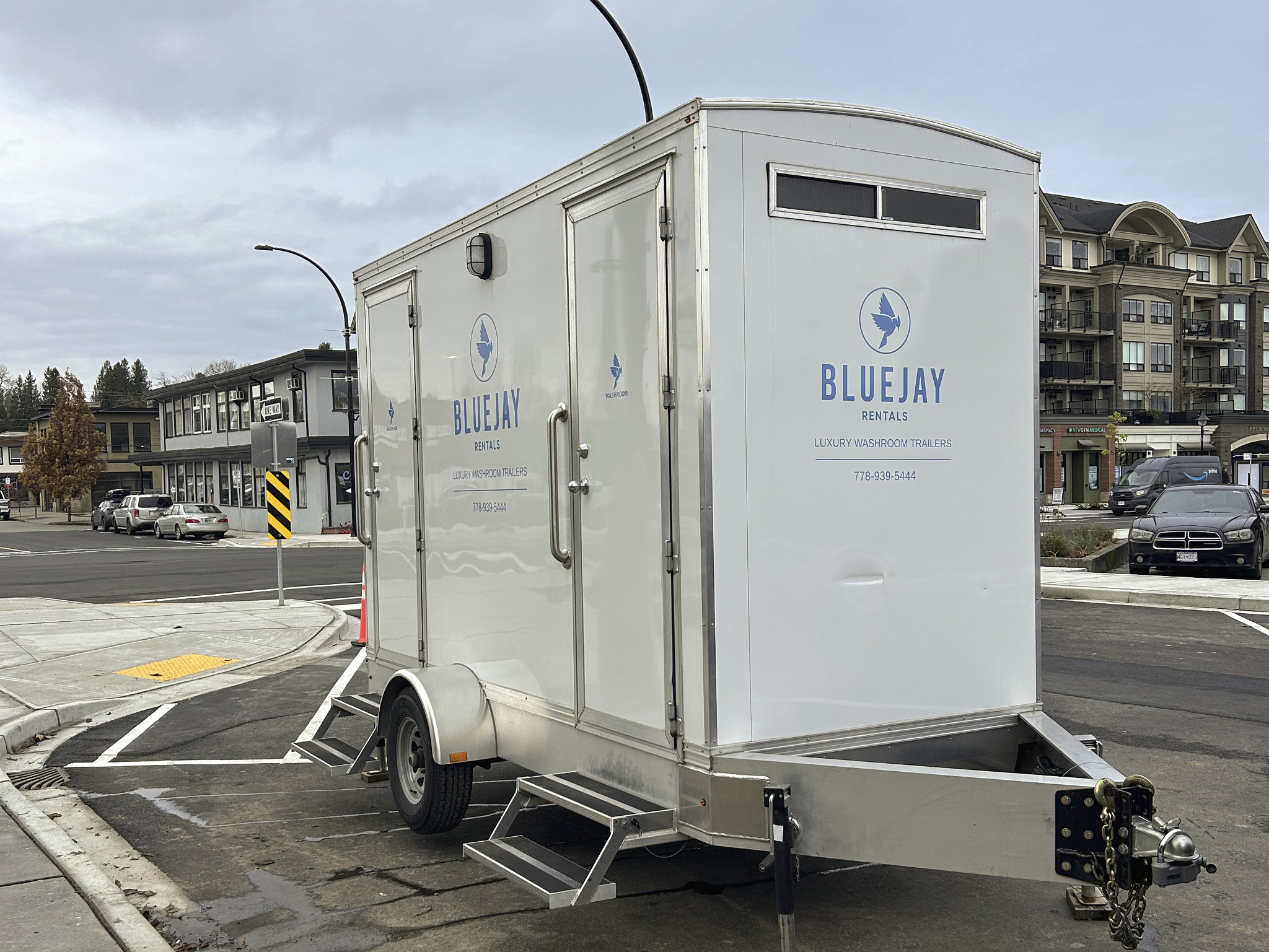
A washroom trailer can look fully equipped and still leave a construction site short of the OHS requirements. Since October 1, 2024, B.C. rules for “specified construction sites” projects where 25 or more workers will be present at any time require enough flush toilets where practicable, along with handwashing, privacy, lighting, ventilation, cleaning, supplies, and maintenance records. For site managers, the question is no longer simply, “Does it flush?” The unit, placement, servicing, and daily upkeep all matter.
Flush Toilet Connected to a Sewer or Holding Tank
Under the regulation, a flush toilet is more specific than a portable unit with a nicer interior. It must connect to a sanitary sewer or holding tank, have a trap or positive seal between the bowl and waste system, and flush waste using clean water or a clean-water-and-chemical mixture. When vetting a rental, confirm those details rather than relying on labels such as “flushable” or “premium restroom.”
A chemical unit is not automatically interchangeable with a flush model on a site covered by the rule. WorkSafeBC allows chemical or other toilets when providing flush toilets is not practicable, but “practicable” means reasonably capable of being done. Access, utilities, the stage of construction, and physical site constraints can matter. Convenience alone should not be the test.
Enough Toilets for the Crew and Readily Available
One well-finished trailer may still be too small for the number of workers on site. Section 20.3.2 calls for a sufficient number of toilets, while WorkSafeBC guidance looks at the largest expected crew on a shift. Its general guidance recommends one toilet in each male or female washroom for 9 or fewer workers, two for 10 to 24, then another for every additional 25. Those numbers are guidance, so the actual worksite still needs to be assessed.
Location counts just as much as fixture numbers. WorkSafeBC generally considers facilities readily available when workers do not have to walk more than 60 metres, or travel more than one floor up or down in a multi-storey workplace. A large tower, civil project, or spread-out jobsite may need several locations rather than one central trailer. Flush facilities may also need support from other toilets where necessary to keep access practical across a large project.
Enclosed Toilet Space That Gives Workers Privacy
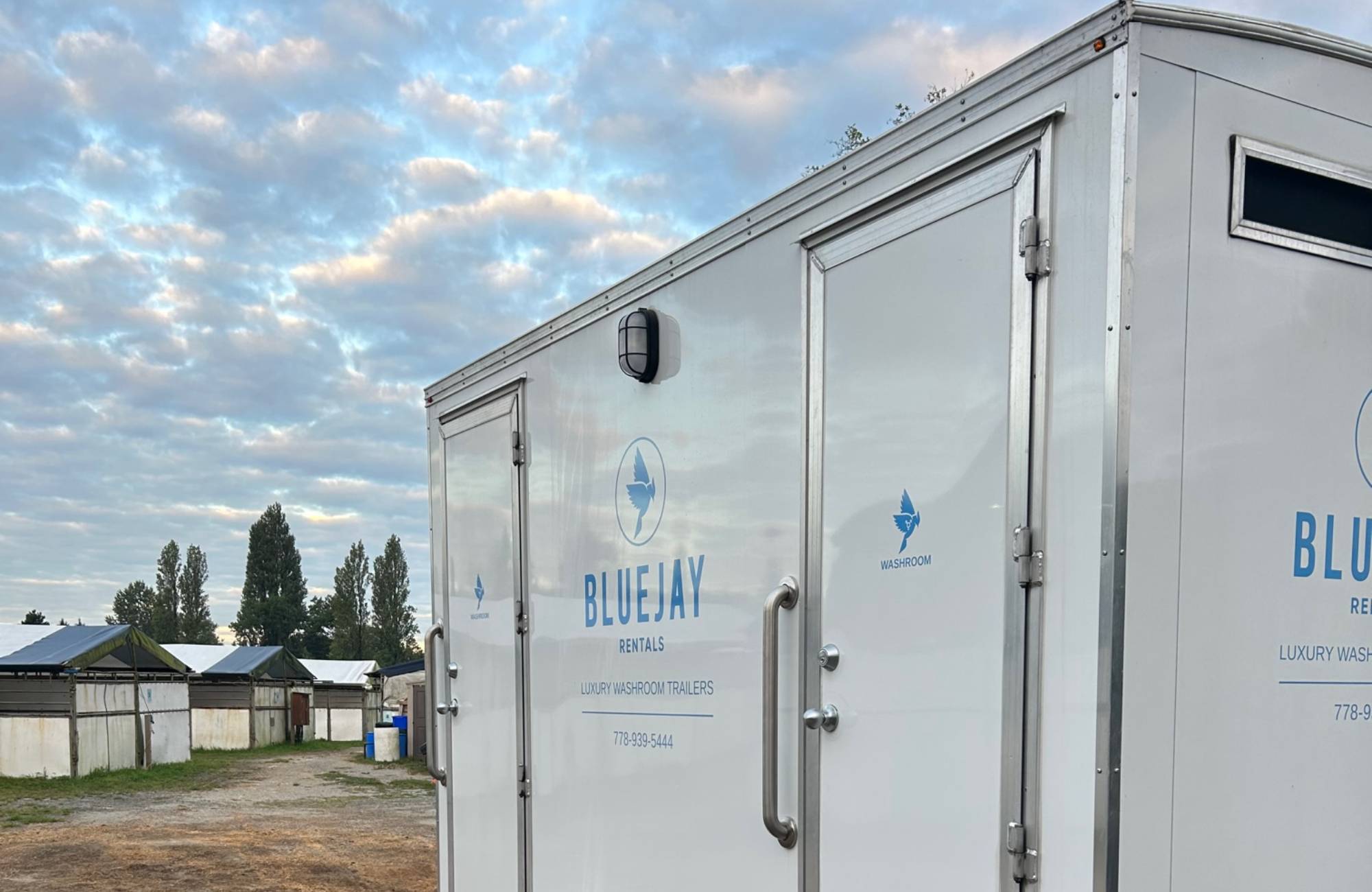
A proper setup needs more than fixtures behind an exterior trailer door. Each toilet must be inside an enclosed space that gives the person using it privacy. Check the stall layout, doors, latches, sightlines, and shared areas before accepting a rental. A spotless interior does not solve a privacy problem if a stall will not lock or workers are exposed whenever someone opens the main entrance.
Think about placement as well. Parking the unit beside a busy gate, public sidewalk, loading area, or lunch space may make it awkward to use even if the interior meets the basic requirement. Make sure doors have room to open, access stays clear, and temporary fencing or stored materials will not interfere.
Good Lighting, Ventilation, and Heat Where Practical
B.C.’s OHS Regulation specifically requires the enclosed toilet area to be illuminated and ventilated. Heating is also required where heating the space is practicable. When comparing units, ask what needs electrical power, whether ventilation is mechanical or passive, and what happens if the site supply goes down. Features listed on a spec sheet only help when they can actually operate at the chosen location.
Seasonal conditions deserve some thought before delivery. A unit that works comfortably during summer can be a different story on a cold B.C. jobsite in January. Talk through heating, water lines, tanks, ventilation, lighting, power, and freeze protection with the rental provider. The aim is not to turn the washroom into a luxury suite. It simply needs to stay functional and usable throughout the workday.
Handwashing Station Inside or Close to the Washroom
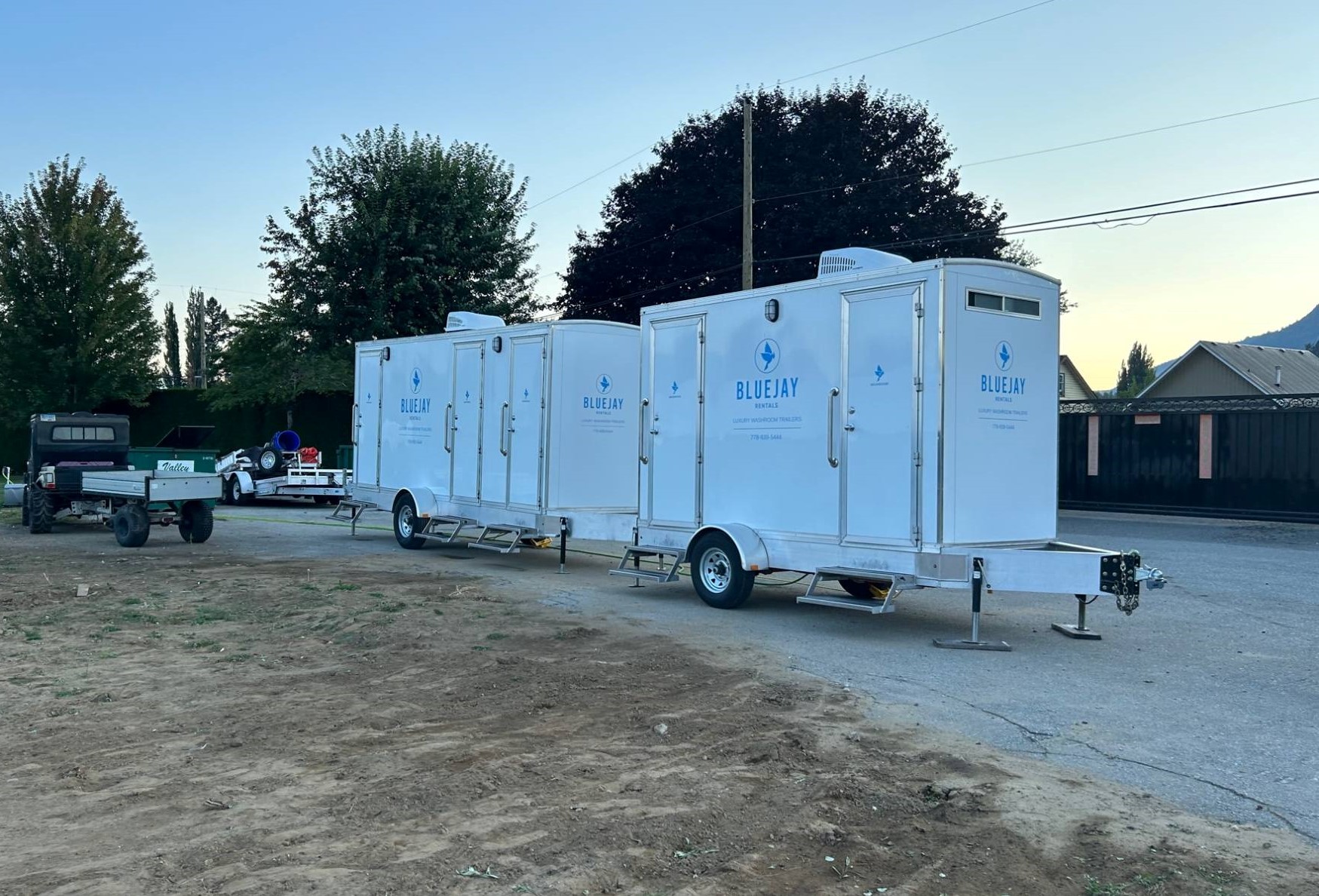
Handwashing cannot be an afterthought sitting at the opposite end of the site. The regulation requires a handwashing facility within or close to the enclosed toilet space. Its definition covers washing with soap and water, or another method of cleaning hands when supplying water is not practicable. A trailer with built-in sinks makes the arrangement straightforward, but someone still needs to check water capacity, wastewater handling, and supplies.
Do not assume a hand-sanitizer dispenser automatically solves every setup. Where water can reasonably be provided, soap-and-water washing is the standard described in the definition. WorkSafeBC’s maintenance guidance also points to basics such as hand cleanser, toilet paper, waste receptacles, and hand-drying towels or dryers. Ask who restocks them and what happens if something runs out halfway between scheduled visits.
Working Toilets Kept Clean, Sanitary, and Fully Supplied
The rental provider may service the trailer, but hiring a supplier does not erase the employer’s responsibility. Facilities must remain in working order and be cleaned and sanitized as frequently as necessary. WorkSafeBC says the service schedule should consider the number of toilets, workers, and shifts. A weekly visit that works on a smaller job may fall far short once the site reaches peak staffing.
Make a quick washroom check part of the normal site routine. A supervisor can catch an empty soap dispenser, blocked fixture, full tank, failed light, broken latch, or wet floor before it becomes a crew-wide problem. WorkSafeBC also recommends a clear way for workers to report maintenance and cleanliness issues. On multiple-employer workplaces, the regulation extends these duties to the prime contractor, so compliance cannot simply be handed to the rental company with the service contract.
Cleaning and Service Records Kept for at Least 30 Days
Recordkeeping is easy to overlook because you cannot see it when the trailer arrives. The regulation requires records of the actions taken to keep toilets working and to clean and sanitize them. Those records must cover at least the most recent 30 days. WorkSafeBC also advises keeping them in a form that can be made available to a prevention officer for review.
Ask what paperwork comes with the rental service before the first visit is due. Dates, cleaning work, waste removal, repairs, and other maintenance details make the service history much easier to follow. Keep provider records together with your own site logs rather than assuming the rental company will always have everything immediately available. If the crew reports a broken fixture and it gets repaired between scheduled visits, record that work too.
Set Up a Better-Managed Construction Site With Bluejay Rental
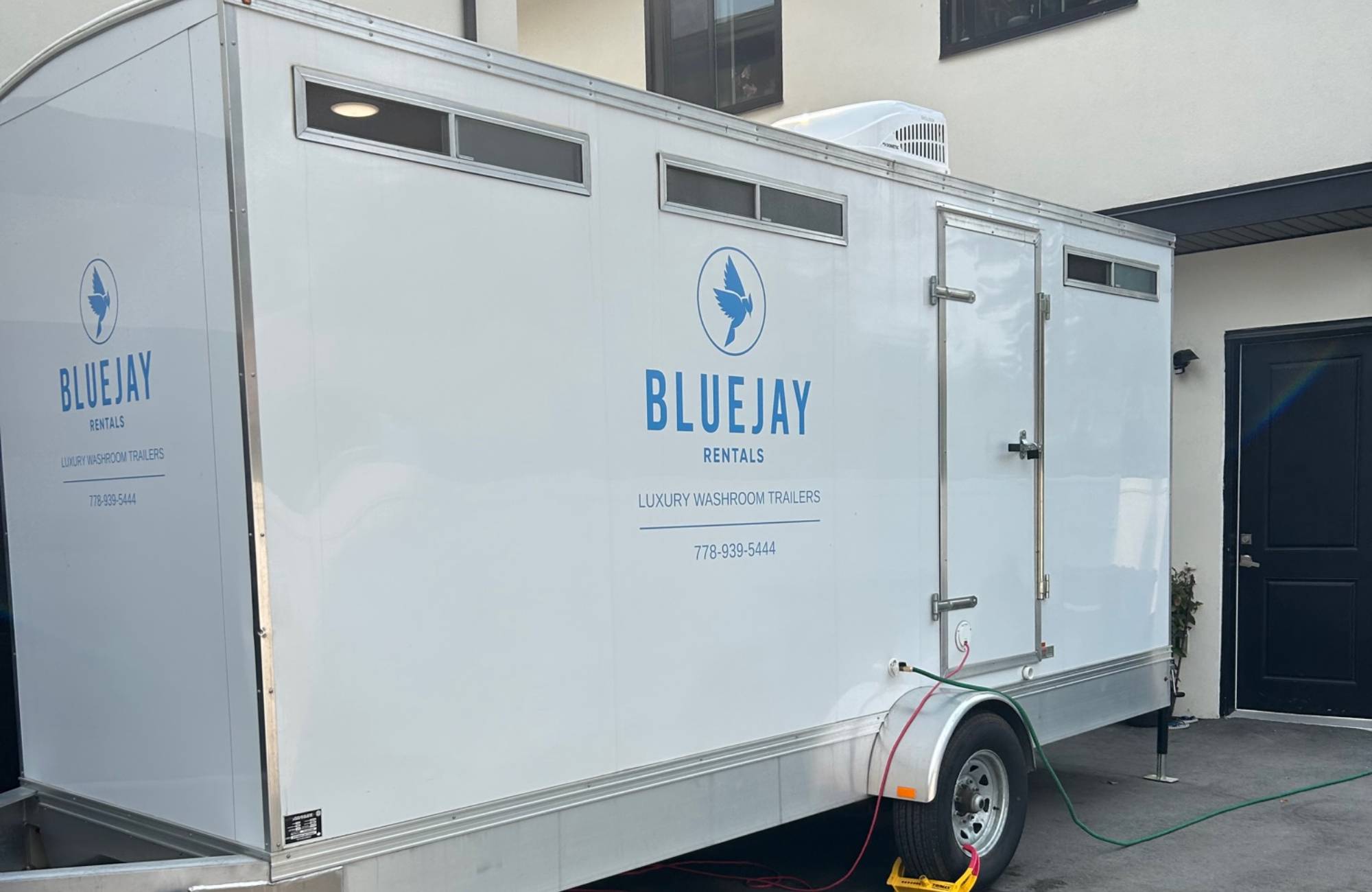
With WorkSafeBC tightening the reins on the new OHS regulations, vetting your facilities isn’t just a box-checking exercise—it’s risk mitigation. You don’t need the headache of wondering whether a rental unit actually meets the technical definition of climate control or proper sanitation mid-inspection. That is where we come in. At Bluejay Rentals, we have already done the heavy lifting, ensuring our washroom trailers strictly align with BC’s updated standards so you don’t have to guess. Let’s make sure your site stays fully compliant and your project stays on schedule. Contact us today, and let’s get your next site set up properly.